Achieving Ideal Load Balancing in Massive Distributed System Networks
The Advancement of Automated Verification in 2026
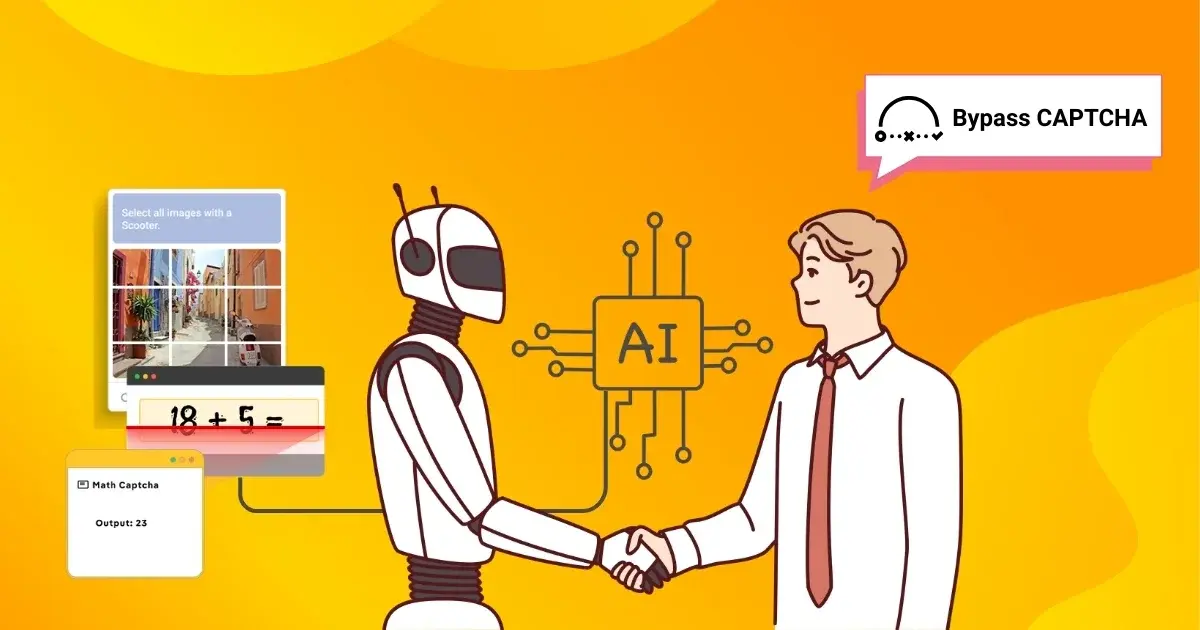
Automated systems have actually moved far beyond the simple text acknowledgment tasks of the early web. In 2026, the barrier in between human activity and maker simulation has actually narrowed to a thin sliver of behavioral information. Many people remember the days of clicking squares consisting of crosswalks or bikes, however those techniques are now relics. Modern security systems concentrate on how a user engages with a page before they even see a difficulty. This shift represents a relocation towards unnoticeable telemetry, where the objective is to determine bots without disrupting the user experience. Security providers now gather information on hardware acceleration, web browser noise, and even the subtle disparities in how a mouse cursor crosses a high-resolution display screen.
Static images used to be the primary method to stop automated scripts. This altered when neural networks ended up being effective enough to parse distorted text and determine things with greater precision than human beings. By the start of 2026, the market approached vibrant behavioral analysis. This strategy does not take a look at what you are, but how you act. It determines the timing in between keystrokes and the speed of scrolls. If a system discovers a level of accuracy that goes beyond human ability, it flags the session. Even the most advanced scripts struggle to simulate the organic doubt and slight mistakes that define human navigation.
Computer Vision and Contextual Awareness in Modern Security
Optical Character Recognition (OCR) has actually seen huge shifts in the last few years. In the past, OCR was about matching shapes to a library of recognized letters. Today, it includes deep semantic understanding. Difficulties in 2026 typically ask users to identify things based upon context or reasoning rather than easy visual matching. For example, a timely might ask to pick the item that would float in water or the animal that runs out location in a specific habitat. These puzzles need a bot to not just see the images but to understand the physics and relationships in between the items portrayed.
Solvers have actually kept rate by using larger models that integrate multi-modal processing. These models can "check out" a scene simply as an individual does. They evaluate the relationship between pixels to identify depth, lighting, and function. As these solvers become more common, security designers have actually turned to adversarial noise. This involves injecting information into images that is invisible to human beings but puzzles the mathematical weights of an AI design. It produces a continuous cycle where vision designs need to be retrained to ignore the noise while concentrating on the real obstacle.
Technical teams that concentrate on Asia Virtual Solutions IPv6 are seeing an increase in specialized hardware utilized for these jobs. In 2026, the expense of solving a challenge is as much about electrical power and processing power as it is about software logic. When a website requires a complex sensible puzzle to be fixed, the bot operator must choose if the benefit for bypassing the wall deserves the expense of the GPU cycles needed to run the solver. This economic friction has actually ended up being a central part of modern-day web defense.
Behavioral Biometrics and the Human Component
Among the most tough things for a maker to duplicate is the physical interaction with hardware. When a human relocations a mouse, the path is never a straight line. There are micro-tremors, modifications in velocity, and courses that follow a particular organic curve. Security systems in 2026 track these movements with severe granularity. They look for the "jitter" that occurs when a hand makes a fine modification. If a cursor moves from point A to point B with an ideal mathematical curve, it is an immediate red flag.
Mobile devices provide even more data points for confirmation. Accelerometer and gyroscope information can inform a security engine if the device is being kept in a hand or sitting on a flat surface. A bot running in a server farm can not easily fake the subtle tilting of a phone that happens when an individual taps a button. Some advanced 2026 systems need the user to carry out a physical gesture, like tilting the phone to move a virtual object into a target. This merges digital verification with physical reality, developing a high barrier for remote automated systems.
Experts who study Asia Virtual Solutions XEvil IPv6 Proxies note that the most significant weakness in behavioral systems is the "recording" technique. Some bot operators record actual human sessions and replay them to pass these checks. To counter this, security engines now try to find "entropy" in the habits. If the very same mouse path is utilized two times throughout millions of sessions, it is determined as a replay attack. Every human movement is distinct, and 2026 systems are developed to detect even the slightest tip of repeating.
The Function of Generative Designs in Automated Bypassing
The increase of generative AI has changed the nature of automated traffic. In 2026, bots do not just follow directions-- they produce brand-new behavior on the fly. Artificial human beings are now utilized to connect with websites. These are AI representatives created with "digital characters" that include specific browsing practices, interests, and even mistakes. They search news websites, inspect weather, and scroll through social networks before attempting to access a safeguarded location. This builds a "credibility" for the session that makes it look like a long-term human user.
This reputation-based security is a double-edged sword. While it stops new bots, it can also punish genuine people who use privacy-focused internet browsers or VPNs. When a user conceals their IP address and clears their cookies, they look like a "new" entity to the security engine. In 2026, the internet has become a location where having no history is practically as suspicious as having a history of bot activity. This has actually led to a push for decentralized identity tokens that show "personhood" without exposing the user's actual identity or searching history.
Technical Breakdown of Logical Obstacles
Logic puzzles have changed the old "recognize the bus" difficulties in lots of high-security environments. These puzzles may involve turning 3D challenge match a shadow or resolving an easy physics issue. Since these jobs are hard to automate with a general script, they require a specialized model for every single kind of puzzle. The diversity of these difficulties is their primary strength. A website may change its puzzle type every few hours, forcing bot operators to continuously upgrade their solvers.
We see a substantial amount of research into "Human-in-the-Loop" (HITL) systems. When an AI solver is uncertain of a challenge, it passes the task to a human worker who solves it in real-time. This hybrid approach allows automated systems to keep high success rates even against new security procedures. Nevertheless, the latency associated with passing an obstacle to a human is typically high enough for the security engine to notice. In 2026, speed is a signal of its own. If an obstacle is resolved too quickly, it's a bot; if it takes too long, it may be a human-assisted bot.
Privacy Issues and the Cost of Verification
The quantity of information collected to confirm a human in 2026 is incredible. Beyond simply mouse motions, systems can gather info about your screen resolution, installed font styles, battery level, and even the particular variation of your graphics motorist. This is referred to as "browser fingerprinting." While it is reliable for stopping bots, it develops a huge path of information that can be utilized to track people across different websites. Privacy advocates argue that the price of a bot-free web need to not be the total loss of privacy.
Some regions have actually begun to regulate the kinds of telemetry that security providers can gather. This has forced companies to find new methods to verify users. One popular method involves "Proof of Work" (PoW) obstacles. Rather of a puzzle, the browser is asked to solve an intricate mathematical issue that takes numerous seconds of CPU time. This doesn't need any personal data, however it makes it extremely pricey for a bot to operate at scale. If every page load expenses 5 seconds of processing power, a bot farm running countless sessions would require an enormous amount of hardware, making the operation unprofitable.
The Future of Human-Machine Interaction
Looking ahead, the line between human and maker will likely continue to blur. We are seeing the development of "trusted execution environments" on user devices. These are safe and secure locations of a processor that can confirm to a site that a genuine human is communicating with the device, without sharing any specific information about that individual. This could ultimately replace the requirement for obstacles totally. If the hardware itself can guarantee the user, the "challenge and reaction" period of the web may finally concern an end.
In the meantime, the arms race continues. Security companies develop a new way to determine human behavior, and bot operators find a way to replicate it. It is a consistent cycle of innovation and adjustment. The websites that remain the most safe and secure are those that use a layered method, integrating behavioral analysis, credibility ratings, and logical difficulties. As we move through 2026, the focus stays on minimizing the friction for genuine users while increasing the cost for automated scripts. The internet of the future depends on this balance, ensuring that services remain available to individuals while staying protected from the sound of the maker world.
Every year, the tech moves even more into the background. The finest confirmation system is the one you never see. By analyzing the quiet signals of a session, 2026 technology intends to keep the digital world open and safe. Whether it is through advanced OCR or deep behavioral tracking, the objective remains the exact same: making sure that the person on the other side of the screen is exactly who they claim to be. The complexity of these systems is a testimony to the resourcefulness of both the individuals developing the walls and those discovering ways to climb them.
Systems now utilize real-time threat scoring that changes based upon worldwide traffic patterns. If a specific kind of bot is seen attacking a site in one part of the world, the security network updates its models globally within seconds. This cumulative intelligence is the strongest defense against the quickly evolving world of automation. In this environment, staying still is the same as falling back. Consistent updates to detection logic and puzzle range are the only way to maintain a secure digital boundary in 2026.