The Function of IPv6 in Scaling Future Automation Architectures

Scaling Proxy Networks for Massive Automation in 2026
High-volume automation has reached a stage where standard information center connections no longer be sufficient for a lot of data gathering jobs. By 2026, the complexity of website security has actually forced a total migration toward residential proxy networks. These networks, made up of IP addresses appointed by Web Service Providers (ISPs) to real house owners, use the legitimacy required to bypass sophisticated anti-bot steps. When managing tools that perform countless requests per hour, the focus shifts from easy connection to the orchestration of thousands of individual exit nodes throughout the globe.
Operating at this scale needs a deep understanding of how residential IPs behave under pressure. Unlike data center IPs, which are fixed and hosted in controlled environments, residential IPs are unpredictable. A home user may turn off their router, or a mobile phone might move between cell towers, triggering a connection to drop. For high-volume tools, the management layer need to account for this volatility. Engineering groups now focus on systems that can spot a stopping working node in milliseconds and reroute traffic to a fresh IP without disrupting the session circulation. This layer of abstraction is what allows automation to function at a level that appears equivalent from human surfing habits.
Success in 2026 relies on the ability to mimic regional patterns. Websites have actually ended up being progressively delicate to geographical inconsistencies. If an automation tool attempts to access a localized service in Tokyo using a London-based IP, the request is typically flagged or served unimportant information. Therefore, the management of these networks includes exact targeting. High-volume tools should be set up to request IPs from particular areas, cities, or even specific ASNs (Autonomous System Numbers) to preserve the illusion of regional presence. Development in data-heavy markets frequently depends upon Asia Virtual Solutions Resource to bypass limiting filters and ensure data precision throughout various markets.
The Mechanics of IP Rotation and Sticky Sessions
Choosing between rotating proxies and sticky sessions is a main choice for any network architect. In high-volume environments, rotation is the default state. Each demand is appointed a various IP address, which prevents a single address from building up sufficient requests to set off a rate limitation. This is ideal for web scraping where the goal is to pull as much information as possible from a wide variety of pages. Nevertheless, rotation can be harmful when an automation tool needs to perform sequential actions, such as logging into a website or navigating a multi-step checkout process.
Sticky sessions address this by holding an IP for a set period, often ranging from ten to thirty minutes. In 2026, handling these sessions at scale includes an advanced intermediary-- the proxy entrance. The gateway handles the reasoning of keeping the connection alive even if the underlying property IP goes offline. If the initial IP disappears, the entrance attempts to discover a comparable replacement from the same service provider and area to decrease the possibility of the target site seeing a change. This perseverance is essential for tools that replicate long-running user sessions where consistency is more crucial than pure privacy.
Another consider high-volume management is the overhead of TLS handshakes. Whenever a tool links to a brand-new proxy, it must work out a safe and secure connection. When doing this millions of times, the latency includes up, significantly decreasing the work. Modern management tools in 2026 use consistent connections to the proxy gateway while turning the exit nodes on the backend. This minimizes the time spent on handshakes and permits the automation tool to maintain a high throughput even when the IP addresses are altering rapidly.
Handling Bandwidth and Concurrency for Large Workloads
Expense management becomes a significant hurdle when dealing with property proxies. Unlike other kinds of network facilities, domestic IPs are often billed by the gigabyte instead of a flat regular monthly charge. For high-volume tools, an improperly optimized scraper can quickly consume countless dollars in bandwidth. Supervisors should carry out strict filtering at the tool level to avoid downloading unneeded possessions like images, videos, or tracking scripts that do not add to the last data set.
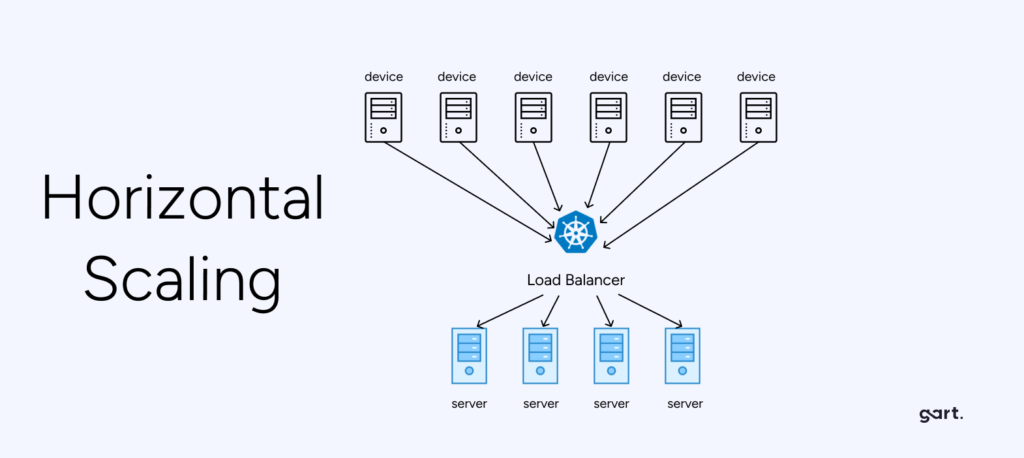
Concurrency is the other side of the effectiveness coin. High-volume tools often run countless threads at the same time. Each thread needs its own connection through the proxy network. If the management system is not capable of managing this concurrency, the threads will experience timeouts or "429 Too Lots of Requests" errors from the proxy service provider itself. To avoid this, many companies use a dispersed architecture where multiple circumstances of the automation tool are spread throughout various cloud suppliers, all funneling into a central proxy management center. Asia Virtual Solutions Premium Proxy Resource helps engineering groups keep uptime throughout peak scraping hours by distributing the load and ensuring that no single entrance is overwhelmed.
Keeping an eye on these connections in real-time is no longer optional. In 2026, dashboarding tools supply live telemetry on success rates, response times, and mistake codes. If the success rate drops below a particular limit, the management system can immediately switch the tool to a various IP swimming pool or a various provider entirely. This multi-provider strategy avoids a single point of failure and guarantees that the automation work continues even if a significant proxy company experiences a network outage or a surge in blocked IPs.
ASN and ISP Targeting for Greater Success Rates
As anti-bot technology has advanced, just having a property IP is insufficient. Many sites now look at the track record of the ISP and the ASN associated with the address. Some ISPs are known to host a greater portion of proxy traffic, making them easier to recognize and block. In 2026, advanced management includes selecting "clean" ASNs that have a high reputation for hosting real domestic users. This level of granularity enables tools to reach targets that were previously thought about unmaskable.
Mobile residential proxies have also become a staple for high-volume tools. These IPs, originating from 5G and 6G networks, are especially important because thousands of real users frequently share a single mobile IP through a procedure called CGNAT. Websites are reluctant to block these IPs since doing so would lead to civilian casualties, obstructing hundreds of genuine users in addition to the bot. While more costly, incorporating a percentage of mobile IPs into a bigger domestic swimming pool can drastically increase the general success rate of an enormous automation task.
Filtering by connection type is another typical method. Some tools carry out much better when limited to fiber or cable connections, which use lower latency compared to satellite or mobile data. By fine-tuning the IP choice criteria, managers can optimize for speed where it is required and for stealth where detection is the main concern. This balanced method is the hallmark of a fully grown network infrastructure in the current year.

Security and Ethical Considerations in Proxy Management
Managing property networks likewise requires a concentrate on security and compliance. In 2026, the industry has actually moved toward more transparent sourcing of IPs. It is essential to make sure that the property nodes in a swimming pool become part of an opt-in network where users are aware their bandwidth is being shared. For business using the tools, this lowers the risk of being connected with unethical practices or legal challenges concerning unauthorized network gain access to.
The information transferred through these proxies need to be dealt with carefully. High-volume tools often deal with sensitive information, and the proxy management layer need to include file encryption and safe authentication to prevent data leakages. Using encrypted tunnels in between the automation tool and the proxy entrance guarantees that even if a node in the domestic network is jeopardized, the information stays inaccessible to the IP owner. This layer of security is standard practice for any organization running high-stakes automation tasks in 2026.
The future of proxy management is leaning toward AI-driven optimization. Systems are now being deployed that can forecast when a certain website will change its bot detection patterns. These systems then instantly change the headers, fingerprinting, and IP rotation frequency of the automation tools to remain ahead of the modifications. This proactive management lowers the requirement for manual intervention and enables high-volume projects to run autonomously for weeks or months at a time, supplying a constant stream of data or actions without the consistent requirement for troubleshooting.
The shift from manual proxy lists to vibrant, handled property networks has changed the way services approach automation. By focusing on the details of session management, geographic targeting, and cost-efficiency, organizations can preserve massive workloads that were difficult just a few years back. As the technology continues to develop, the difference between human and automatic traffic will likely end up being even thinner, making the role of the proxy supervisor a main figure in the digital economy.