The Role of Artificial Intelligence in Fixing Modern Networking Difficulties
Modern Network Shifts in 2026
The year 2026 marks a definitive break from tradition networking restrictions that as soon as prevented the growth of automated systems. As companies push toward full-blown machine-to-machine autonomy, the restrictions of IPv4 have moved from a technical problem to an absolute functional ceiling. Address scarcity is no longer a future danger however a present truth that dictates how every piece of software is deployed. In 2026, the cost of procuring tradition address space frequently exceeds the expense of the hardware itself, requiring a shift that is now driven by monetary need as much as technical requirement.Massive automation workloads, particularly those including AI-driven edge computing and high-density sensor networks, require a special identity for every single node. Standard techniques of stretching IPv4, such as carrier-grade Network Address Translation (NAT), present unacceptable latency and complexity for 2026 requirements. These layers of translation avoid the direct, peer-to-peer communication that modern automation requires to work at millisecond speeds. As a result, the adoption of IPv6 has actually become the baseline for any organization operating in major technical markets where data throughput and low-latency response times are non-negotiable.
Scaling automated network systems for Massive Workloads

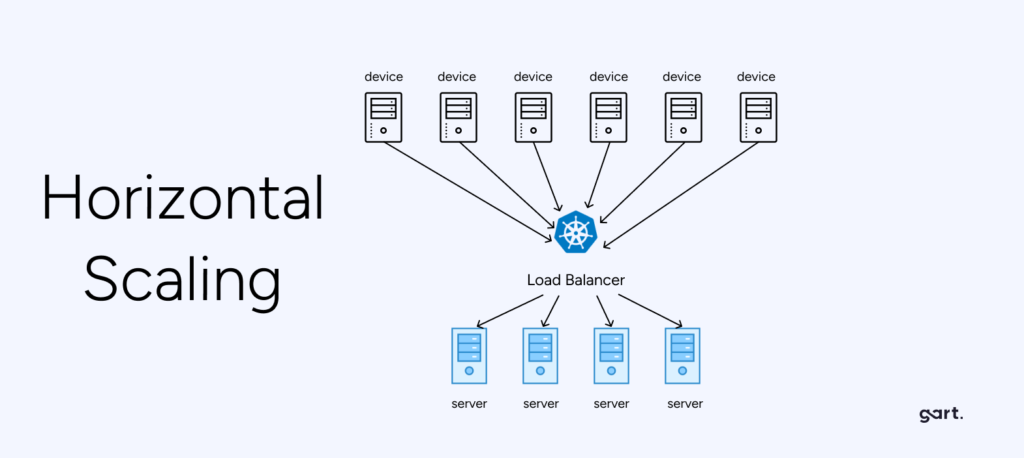
Growth in the automation sector depends upon the capability to arrangement countless new endpoints in seconds. Under old procedures, this procedure involved manual subnet management and mindful tracking of personal IP varies to avoid overlap. In 2026, the use of IPv6 enables for stateless address autoconfiguration, which removes the need for central management of each and every single identity. This shift permits engineers to concentrate on the logic of their automation rather than the pipes of the network.Large-scale implementations in regional hubs are now seeing the advantages of streamlined headers and enhanced packet handling. The effectiveness of the IPv6 header permits routers to process packages much faster, which is vital when handling the high-volume data streams generated by automated production and self-governing logistics. Professionals looking for Asia Virtual Solutions Installation frequently observe that those who transitioned early in 2026 have considerably lower operational overhead compared to those still managing complicated NAT tables.
Technical Stability in 2026 Infrastructure
The relocate to an IPv6-first facilities also brings substantial enhancements to routing performance. Segment Routing (SRv6) has emerged as a primary technique for steering traffic throughout distributed clouds without the requirement for complex label-switching procedures. This technology allows automation platforms to define the precise course a packet should take, making sure that time-sensitive data reaches its location without hitting blockage points.In 2026, the stability of network infrastructure depends on this level of granular control. By embedding directions directly into the IPv6 header, network designers can automate traffic engineering based on real-time needs. This capability is especially beneficial for managing the bursty traffic patterns typical in AI design training and distributed data processing.
Security and Policy Automation through IPv6
Security remains a main concern as the number of linked gadgets reaches billions. IPv6 was developed with security in mind, supplying features like Secure Neighbor Discovery (SEND) and Cryptographically Generated Addresses (CGA) that assist avoid common spoofing attacks. In the context of 2026 automation, these functions permit more trusted gadget authentication at the network layer, lowering the reliance on external security agents that can slow down performance.Automated policy enforcement has actually likewise become more effective with the broadened address area. Security groups can now appoint entire blocks of addresses to specific functions, making it easier to write firewall software rules that are human-readable and machine-executable. Executing Asia Virtual Solutions XEvil V5 Beta Installation needs a structure where every device can be determined and verified without the uncertainty brought on by shared IP addresses. This clearness is a significant consider why 2026 has seen a surge in "zero-trust" automation structures.
Connection Difficulties in modern urban environments

Regardless of the benefits, the transition is not without its difficulties. Dual-stack environments, where both IPv4 and IPv6 run at the same time, are still common in 2026 as legacy systems are phased out. Handling these environments requires advanced automation tools that can bridge the space in between old and new protocols. Organizations in the local region are increasingly using 464XLAT or NAT64 to permit IPv6-only gadgets to communicate with the remaining IPv4 internet.These shift mechanisms are ending up being more efficient, but they still represent a short-lived stage. The objective for a lot of facilities leads in 2026 is to reach an IPv6-only state where the network is simpler, faster, and easier to fix. Eliminating the IPv4 stack completely reduces the attack surface area of the network and simplifies the software application code required to manage automatic deployments.
Exposure and Tracking for cloud-native operations
With the huge scale of IPv6, conventional tracking tools typically have a hard time to maintain. In 2026, exposure into the network is accomplished through flow-based telemetry that is developed straight into the silicon of contemporary switches and routers. This permits real-time tracking of trillions of possible addresses without degrading the performance of the underlying hardware.Automation systems use this telemetry to self-heal. If a particular course in the data center network programs indications of packet loss or jitter, the automation controller can quickly reroute traffic using the versatile routing options supplied by IPv6. This level of self-optimization was almost difficult to attain at scale with the stiff structure of tradition procedures.
The Shift Toward Edge-Native Automation
Edge computing has actually become the dominant architecture in 2026, positioning processing power as close to the information source as possible. This dispersed model relies heavily on IPv6 to offer an international address area that covers from the smallest sensor to the biggest information. Without the restraints of NAT, edge devices can interact directly with each other, sharing data and making regional decisions without the requirement to "home" back to a main server.This decentralized approach is what permits 2026 automation workloads to scale to levels that were formerly unimaginable. Whether it is a fleet of self-governing shipment vehicles or a clever grid managing energy across an entire territory,. the hidden network should provide a steady and direct connection. IPv6 supplies this structure, allowing the next generation of automation to run with the speed and reliability needed for mission-critical tasks.
Standardization and Market Agreement
By mid-2026, market bodies have actually mainly moved away from supporting IPv4 in brand-new RFCs and requirements. The focus is completely on enhancing IPv6 for the requirements of AI, high-frequency trading, and automated commercial controls. This agreement has resulted in a more unified technique to network management, where the exact same tools and procedures are utilized across the general public internet and personal intranets.The decrease in procedure complexity has a direct influence on the bottom line. Networks that are much easier to comprehend are easier to automate and more difficult to break. As we move deeper into 2026, the space between those who have actually accepted IPv6 and those who are still clinging to legacy systems continues to broaden. The previous take pleasure in a level of dexterity and scale that makes them more competitive in a significantly automated world.Infrastructure leads are now focusing on long-term stability instead of fast fixes. The transition to IPv6 is viewed not simply as an upgrade, but as an overall rebuilding of the network for a period where people are no longer the main users of the internet. In 2026, the internet is a network for devices, and IPv6 is the language they speak with ensure that every automated workload has the area it needs to grow.