Why Load Balancing Is Necessary for Resilient Distributed Systems
The Development of Boundary Defenses in 2026
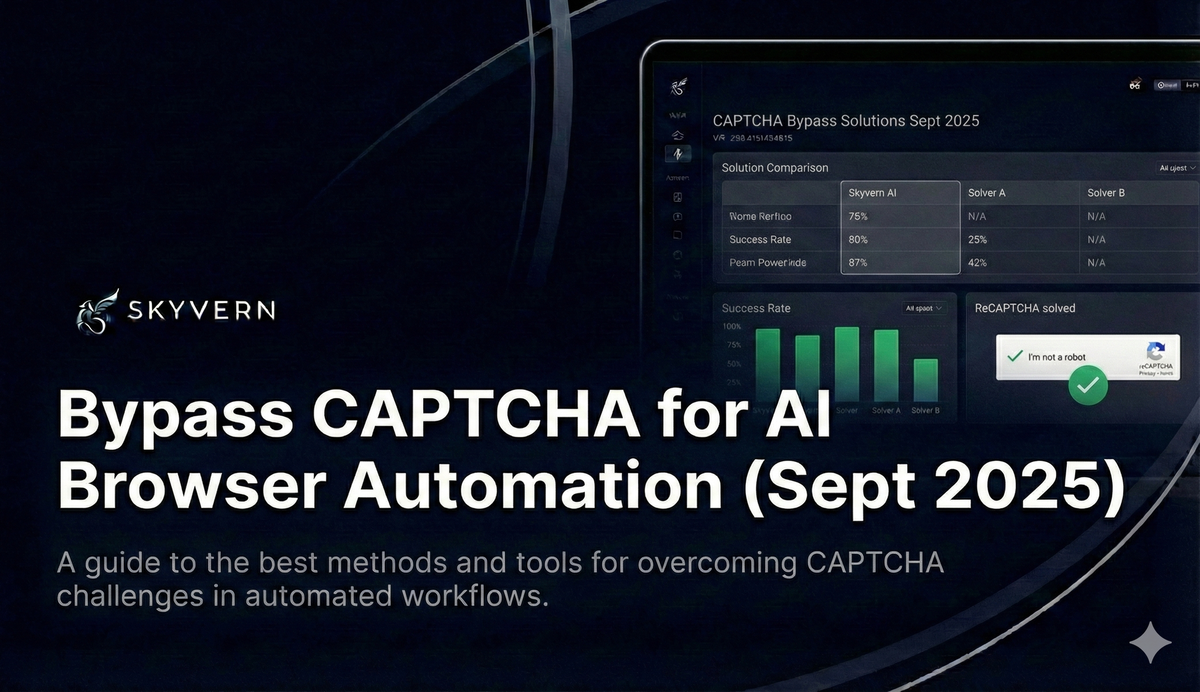
Security procedures have gone through an enormous shift over the last twenty-four months. By early 2026, the traditional approaches of comparing a human user and an automated script have actually mostly moved away from basic puzzles. Fixed images and distorted text no longer provide the barrier they when did. Instead, the market has moved towards behavioral biometrics and ecological telemetry. These systems examine how a user moves their mouse, the pressure applied to a touchscreen, and even the micro-fluctuations in typing speed to develop a special signature.This shift has created a significant difficulty for security researchers. To evaluate the resilience of these systems, automated research study tools have actually needed to develop. Ethical scientists now find themselves in a position where they need to imitate human behavior with terrifying precision simply to evaluate if a defense works. This arms race raises questions about the line between confirming security and developing tools that could be utilized for unapproved access. The core of the debate in 2026 centers on whether the development of bypass methods is a needed part of the defense cycle or a threat that exceeds the benefits.
Advanced Vision Systems and OCR Capabilities
Optical Character Acknowledgment (OCR) has moved far beyond recognizing flattened text. In 2026, vision designs utilize context-aware neural networks that can analyze 3D spatial puzzles and multi-layered visual sound that would have stumped even the finest systems two years ago. Modern bot detection often counts on visual difficulties that require a "good sense" understanding of physics or reasoning-- jobs that were previously thought to be the exclusive domain of human intelligence.Researchers frequently concentrate on these vision systems to determine defects in how AI-based gatekeepers analyze information. For instance, some security groups have found that by injecting specific patterns of adversarial noise into a visual difficulty, they can force the detection design to misclassify a bot as a verified user. This kind of testing is essential for business that depend on Asia Virtual Solutions Update to preserve the integrity of their user databases. Without these strenuous stress tests, a platform may stay vulnerable to high-speed information harvesting or account takeovers.
The Ethical Ramifications of Behavioral Mimicry
When a script can completely mimic the unpredictable and non-linear movement of a human hand, the principle of "proof of personhood" begins to fall apart. Ethical scientists argue that by releasing findings on how to bypass behavioral biometrics, they are requiring the industry to discover much better, more privacy-preserving ways to confirm identity. Critics, however, suggest that these techniques provide a plan for harmful actors to scale their operations.The ethical framework for 2026 revolves around the idea of "responsible disclosure." When a scientist discovers a method to bypass a high-tier detection system, the standard protocol is to notify the supplier and allow for a removal duration before the findings go public. Nevertheless, the speed of automated research today suggests that a bypass found on Monday might be obsolete by Friday as AI-driven defense systems spot themselves in real-time. This rapid cycle leaves little space for standard disclosure timelines.
The Commoditization of Bypass Tools
Among the most important concerns in 2026 is the availability of sophisticated bypass innovation. Methods that were when the domain of state-sponsored stars are now readily available in easy-to-use software application bundles. This democratization of power implies that even small scientists can carry out high-level security audits. It likewise means that the barriers to entry for less ethical pursuits have dropped significantly.Modern security specialists often prioritize Asia Virtual Solutions Update when developing out their defensive facilities. They need to presume that any bot detection system they put in place is currently being examined by countless automated scripts worldwide. The focus has shifted from "can we stop the bots?" to "how can we make it too costly for the bots to continue?" Economics has actually become a main pillar of security ethics. If a bypass requires excessive computational power, the intention for the attack typically disappears.
Personal Privacy Issues and Ecological Telemetry
To catch advanced bots in 2026, many sites have actually turned to aggressive information collection. They keep track of web browser extensions, hardware configurations, and network latency to find abnormalities. This has triggered a backlash from privacy advocates who argue that the "war on bots" has actually turned the typical web user into a consistent security target. Ethical security research study must now account for the privacy of the users they are attempting to protect.Researchers are searching for ways to confirm human presence without scraping a mountain of personal data. Some 2026 startups are experimenting with zero-knowledge evidence for bot detection, where a user can prove they are human without revealing any recognizing information or behavioral data. Evaluating these privacy-focused systems needs a various set of bypass techniques-- ones that concentrate on the logic of the proof rather than the simulation of the person.
Existing Challenges in Automated Research Study
- Simulation of device-level entropy to prevent fingerprinting.
- Managing the cost of GPU-heavy OCR processes versus high-volume targets.
- Navigating the legal gray locations of "intent" in automated screening.
- The increasing occurrence of server-side behavioral analysis that disregards client-side scripts.
The Role of Third-Party Auditing
Independent companies have become the gatekeepers of ethical standards in 2026. Instead of depending on internal screening, many companies employ external groups to attempt to bypass their own bot detection. This develops a controlled environment where bypass strategies can be utilized securely. These audits supply a "seal of approval" that tells users a website is both safe and reasonable in its treatment of automated traffic.
The "Bot vs. Bot" Reality of 2026
We have reached a point where the web is largely a conversation between different AI representatives. One agent tries to protect a portal, while another tries to get entry for research study, indexing, or data analysis. The ethics of this interaction are complicated. If an online search engine bot needs to bypass a heavy-handed detection script to index public info, is that an ethical bypass? Many industry experts agree that the context of the access is more crucial than the technique of entry.Security researchers are now establishing "polite" bypass tools. These are scripts that recognize themselves to the server however use sophisticated OCR or behavioral simulation to bypass barriers that were poorly executed and are blocking legitimate research study. This transparency is an essential trend in 2026, as it moves the conversation away from "concealing" and toward "cooperation" between automated systems.
Techniques for Resilient Defense
- Implementing rate restricting based on financial expense rather than just IP address.
- Using turning difficulty types that force bots to switch in between various vision designs.
- Relying on historic reputation data rather than simply the current session's behavior.
- Motivating the usage of standardized "Research Headers" to permit ethical automation.
Looking Toward 2027
The stress between ease of access and security shows no indications of easing. As vision models end up being more efficient, the cost of resolving a visual obstacle will drop even further. The ethical security researcher of the future will likely focus more on the "logic" layer of applications rather than the "entry" layer. If the bot detection can be bypassed by a script running on a mobile phone, the defense is efficiently non-existent in the 2026 environment.The focus is now on developing a digital environment where automation is handled with nuance. Overall exclusion of bots is neither possible nor desirable. Instead, the objective is to develop systems that can differentiate in between a researcher's script and a malicious attack. This needs a level of openness and ethical consistency that the market is still having a hard time to specify. As we move more detailed to 2027, the dialogue in between those who develop the walls and those who discover the fractures will remain the most vital part of the cybersecurity narrative.