Why Residential Proxy Management Is Essential for Business Automation

Modern Network Shifts in 2026
The year 2026 marks a conclusive break from legacy networking restraints that once prevented the growth of automated systems. As organizations press towards full-scale machine-to-machine autonomy, the limitations of IPv4 have moved from a technical annoyance to an absolute operational ceiling. Address shortage is no longer a future risk however a present reality that determines how every piece of software is deployed. In 2026, the cost of acquiring tradition address area often exceeds the expense of the hardware itself, requiring a shift that is now driven by monetary need as much as technical requirement.Massive automation workloads, especially those involving AI-driven edge computing and high-density sensing unit networks, require a distinct identity for each node. Traditional techniques of stretching IPv4, such as carrier-grade Network Address Translation (NAT), present unacceptable latency and complexity for 2026 requirements. These layers of translation prevent the direct, peer-to-peer interaction that modern-day automation needs to work at millisecond speeds. The adoption of IPv6 has ended up being the standard for any company operating in major technical markets where data throughput and low-latency response times are non-negotiable.
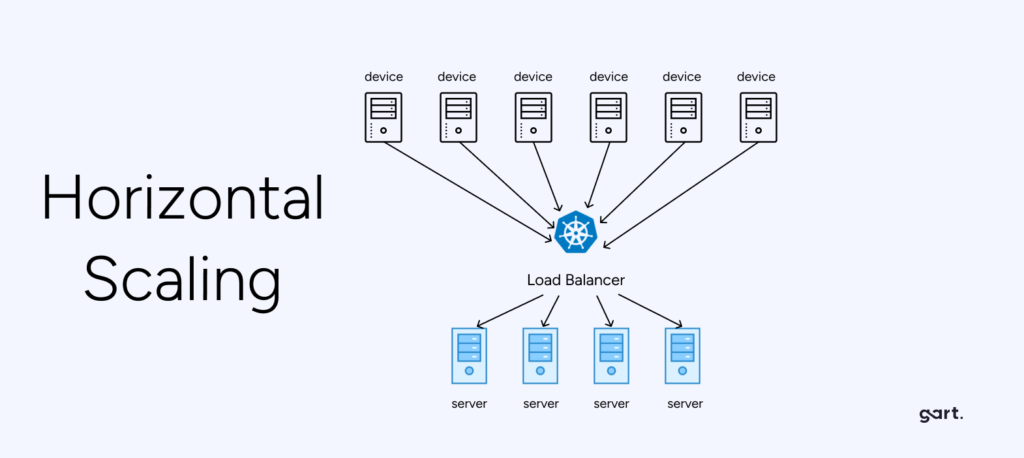
Scaling automated network systems for Huge Work
Development in the automation sector depends upon the ability to provision countless new endpoints in seconds. Under old procedures, this process included manual subnet management and mindful tracking of private IP ranges to avoid overlap. In 2026, making use of IPv6 permits stateless address autoconfiguration, which gets rid of the requirement for central management of every single identity. This shift allows engineers to focus on the reasoning of their automation instead of the pipes of the network.Large-scale deployments in regional hubs are now seeing the benefits of simplified headers and enhanced package handling. The performance of the IPv6 header allows routers to process packages faster, which is vital when dealing with the high-volume data streams produced by automated production and self-governing logistics. Specialists looking for Asia Virtual Solutions Setup frequently observe that those who transitioned early in 2026 have significantly lower operational overhead compared to those still handling complicated NAT tables.
Technical Stability in 2026 Infrastructure
The relocate to an IPv6-first facilities likewise brings substantial improvements to routing performance. Sector Routing (SRv6) has become a primary technique for steering traffic across dispersed clouds without the requirement for complex label-switching protocols. This technology allows automation platforms to specify the exact path a package need to take, ensuring that time-sensitive information reaches its location without striking blockage points.In 2026, the stability of network infrastructure depends on this level of granular control. By embedding guidelines directly into the IPv6 header, network architects can automate traffic engineering based on real-time needs. This capability is particularly useful for dealing with the bursty traffic patterns typical in AI model training and dispersed information processing.
Security and Policy Automation through IPv6
Security remains a main issue as the variety of linked devices reaches billions. IPv6 was designed with security in mind, offering functions like Secure Next-door neighbor Discovery (SEND) and Cryptographically Generated Addresses (CGA) that help avoid common spoofing attacks. In the context of 2026 automation, these functions permit for more trusted device authentication at the network layer, minimizing the dependence on external security agents that can decrease performance.Automated policy enforcement has actually also ended up being more reliable with the expanded address space. Security groups can now designate entire blocks of addresses to specific functions, making it simpler to write firewall software rules that are human-readable and machine-executable. Implementing Asia Virtual Solutions XEvil 6 Beta Setup needs a foundation where every device can be identified and verified without the obscurity brought on by shared IP addresses. This clearness is a significant consider why 2026 has actually seen a rise in "zero-trust" automation structures.
Connectivity Obstacles in modern urban environments

Regardless of the advantages, the shift is not without its hurdles. Dual-stack environments, where both IPv4 and IPv6 run simultaneously, are still typical in 2026 as legacy systems are phased out. Handling these environments needs sophisticated automation tools that can bridge the space between old and brand-new procedures. Organizations in the local region are increasingly utilizing 464XLAT or NAT64 to enable IPv6-only gadgets to communicate with the staying IPv4 internet.These shift systems are becoming more effective, but they still represent a temporary phase. The objective for most infrastructure leads in 2026 is to reach an IPv6-only state where the network is simpler, much faster, and much easier to troubleshoot. Getting rid of the IPv4 stack entirely lowers the attack surface of the network and simplifies the software code required to handle automated releases.
Presence and Tracking for cloud-native operations
With the massive scale of IPv6, traditional tracking tools often struggle to keep up. In 2026, presence into the network is attained through flow-based telemetry that is constructed directly into the silicon of modern switches and routers. This permits real-time tracking of trillions of possible addresses without breaking down the performance of the underlying hardware.Automation systems utilize this telemetry to self-heal. If a particular path in the data center network shows indications of packet loss or jitter, the automation controller can instantly reroute traffic using the flexible routing alternatives supplied by IPv6. This level of self-optimization was nearly impossible to achieve at scale with the rigid structure of tradition procedures.
The Shift Toward Edge-Native Automation
Edge computing has actually ended up being the dominant architecture in 2026, putting processing power as near the information source as possible. This dispersed model relies greatly on IPv6 to provide an international address space that spans from the smallest sensor to the largest data. Without the restrictions of NAT, edge devices can communicate directly with each other, sharing data and making local choices without the requirement to "home" back to a main server.This decentralized approach is what allows 2026 automation workloads to scale to levels that were formerly unthinkable. Whether it is a fleet of autonomous delivery cars or a wise grid handling energy across an entire territory,. the hidden network must offer a stable and direct connection. IPv6 offers this foundation, allowing the next generation of automation to operate with the speed and dependability required for mission-critical tasks.
Standardization and Market Agreement
By mid-2026, market bodies have mainly moved far from supporting IPv4 in brand-new RFCs and requirements. The focus is totally on enhancing IPv6 for the needs of AI, high-frequency trading, and automated industrial controls. This agreement has actually led to a more unified approach to network management, where the very same tools and protocols are used throughout the general public web and private intranets.The decrease in procedure complexity has a direct effect on the bottom line. Networks that are simpler to comprehend are easier to automate and harder to break. As we move deeper into 2026, the gap in between those who have actually accepted IPv6 and those who are still clinging to tradition systems continues to expand. The previous enjoy a level of dexterity and scale that makes them more competitive in a significantly automated world.Infrastructure leads are now focusing on long-lasting stability rather than fast repairs. The transition to IPv6 is seen not simply as an upgrade, but as a total rebuilding of the network for a period where people are no longer the primary users of the web. In 2026, the web is a network for makers, and IPv6 is the language they speak to ensure that every automated work has the area it requires to grow.